- Abstract
- Keywords
- Introduction
- Material And Methods
- Results
- Discussion
- Conclusion And Recommendations
- References
 Download PDF
 Download XML




Background: Nature-Based Solutions (NBS) are gaining global attention as sustainable approaches to mitigating climate change, enhancing biodiversity, and supporting human well-being. Despite their growing importance, youth awareness and participation in NBS remain limited, especially in rural regions like Kotalipara of Gopalganj, Bangladesh.
Aim of the study: This study aimed to assess the awareness, knowledge, and engagement of youth in Kotalipara with Nature-Based Solutions, identify the barriers they face, and explore their perspectives on strengthening local environmental initiatives.
Methods: A cross-sectional study was conducted among 150 students from three educational institutions in Kotalipara, selected through purposive sampling. Data were collected using a structured questionnaire comprising both closed and open-ended questions covering knowledge of NBS, sources of information, past participation in environmental activities, perceived challenges, and recommendations. Quantitative data were analyzed using SPSS (Version 26), primarily with descriptive statistics and chi-square tests.
Result: A study of 150 students in Kotalipara, Gopalganj, showed high overall awareness of Nature-Based Solutions (93.3%), varying slightly across institutions (Kamalkunri: 84%, Public: 92%, College: 98%). Social media and community programs were key information sources, with curriculum influence noted in college students. Tree plantation was the most recognized NBS activity, and participation in environmental activities ranged from 46% to 66%. Barriers included lack of awareness/training (schools) and financial/opportunity limitations (college). Tree planting was the most preferred NBS activity, with college students also favoring community gardening and waste management.
Conclusion: The study highlights a promising level of awareness about NBS among rural youth in Kotalipara, though practical involvement remains limited due to systemic barriers. Addressing these challenges through targeted awareness campaigns, institutional collaboration, and youth-inclusive environmental policies could significantly enhance community resilience and sustainability.
The intensifying impacts of climate change and environmental degradation have underscored the urgency of implementing sustainable, inclusive strategies to mitigate environmental risks and promote ecological resilience. Among these, Nature-Based Solutions (NBS) defined as actions that protect, sustainably manage, and restore natural or modified ecosystems to address societal challenges, have garnered global recognition for their ability to harmonize ecological and human well-being [1]. These solutions encompass a range of practices such as reforestation, wetland rehabilitation, agroecology, and green infrastructure, offering co-benefits in climate adaptation, biodiversity conservation, and disaster risk reduction [2]. NBS are becoming crucial parts of national and local resilience strategies as the climate catastrophe worsens [3]. The role of youth in advancing NBS is particularly critical, given their unique position as both current stakeholders and future leaders. According to the 2021 Changing Childhood Project led by UNICEF and Gallup, over 90% of young people in Bangladesh are aware of climate change, with a majority calling for stronger governmental climate action [4]. This high level of environmental awareness places Bangladeshi youth among the most environmentally conscious populations in the Global South. However, awareness alone does not translate into engagement [5]. Mobilizing youth into action requires institutional mechanisms, education, and localized platforms for participation—particularly in vulnerable regions where the effects of climate change are most acute [6]. Bangladesh, being one of the most climate-vulnerable nations, is already facing the dire consequences of environmental instability, including floods, cyclones, salinity intrusion, and erratic rainfall [7]. These climate-induced hazards disproportionately affect rural areas, such as Kotalipara in the Gopalganj district, where seasonal flooding, river erosion, and ecosystem degradation threaten livelihoods and infrastructure [8]. In such regions, NBS could offer cost-effective, community-driven alternatives to conventional infrastructure by promoting soil stabilization, sustainable agriculture, and watershed management [9]. Yet, the extent to which local youth understand, engage with, or contribute to these nature-based practices remains poorly documented [10]. Over the past decade, several youth-led and youth-oriented environmental movements have gained traction in Bangladesh. For example, the Bangladesh Youth Environmental Initiative (BYEI) has trained over 500 young environmental leaders, promoting ecological literacy and climate leadership through workshops, campaigns, and mentorship programs [11]. Programs like the Earth Champions Program (ECP) have further encouraged rural youth to take initiative in local conservation efforts [12]. Despite these promising efforts, youth in many rural settings face persistent barriers to full engagement in NBS, including limited access to formal environmental education, financial constraints, lack of local mentorship, and minimal policy inclusion [13]. Furthermore, there is a gap in localized empirical data that could inform policy and community-based interventions targeting youth engagement in NBS. Without understanding the specific knowledge, attitudes, and constraints of young people at the grassroots level, policy frameworks risk remaining disconnected from on-the-ground realities [14]. Particularly in areas like Kotalipara—where youth could act as powerful agents of ecological transformation, assessing their awareness and challenges is pivotal [15]. Therefore, this study aims to assess youth awareness, challenges, and opportunities related to Nature-Based Solutions in Kotalipara through a structured questionnaire.
This cross-sectional, questionnaire-based study was conducted from 13 January to 19 January 2025 in Kotalipara, Gopalganj, Bangladesh, to assess youth awareness, participation, and perceived barriers related to Nature-Based Solutions (NBS). Using purposive sampling, 150 students were selected from three educational institutions: Kamalkunri Biddyaniketon, Kotalipara Public Institution, and Kotalipara Sheikh Lutfor Rahman Adarsha Government College. These schools represent lower secondary, secondary, and higher secondary levels. Data were collected using a structured questionnaire designed to capture key variables such as NBS awareness, sources of information, involvement in environmental activities, knowledge of NBS practices, and participation barriers. The survey was administered in a controlled classroom setting to ensure independent responses and reduce external influence, thereby enhancing the reliability of the data collected.
Inclusion Criteria
Students aged between 12 and 22 years.
Enrolled in one of the three selected institutions in Kotalipara.
Belonging to lower secondary, secondary, or higher secondary education levels.
Both male and female students.
Demonstrated basic comprehension of the questionnaire.
Provided voluntary consent and were present during the data collection period.
Exclusion Criteria
Students who were absent during the survey period.
Those who were unwilling to participate in the study.
Participants who had difficulty understanding the questionnaire content.
Responses that were incomplete, ambiguous, or inconsistent were excluded to ensure data validity.
Ethical Considerations
Ethical approval for the study was obtained from the academic committee of the Environmental Science Discipline, Khulna University. Prior to participation, verbal consent was obtained from all students, and consent from school/college authorities was also secured. Students were informed that participation was voluntary, data would be used solely for research purposes, and their identities would remain confidential. No personal identifiers were collected, and participants were allowed to withdraw at any time without consequence.
Data Collection Procedure
A structured questionnaire was developed and administered in Bangla to assess student awareness, participation, and perceived barriers related to Nature-Based Solutions (NBS). It included both multiple-choice and yes/no questions. Data were collected in January 2025 from three educational institutions, with 50 students selected from each (n = 150). Participants completed the questionnaires individually in a classroom setting to minimize peer influence. The data enabled examination of associations between categorical variables such as gender, age group, and institution type with awareness and participation.
Statistical Analysis
Statistical analyses were conducted using SPSS software (version 26). Categorical variables were summarized using frequencies and percentages. The chi-square (χ²) test was applied to examine associations between categorical variables such as gender, age group, institution type, and awareness or participation in NBS-related activities. For multiple-response questions, frequency distributions were calculated to identify the most commonly cited responses.
A total of 150 students from three educational institutions in Kotalipara, Gopalganj participated in this study. Among them, 50 students were from Kamalkunri Biddyaniketon, 50 from Kotalipara Public Institution, and 50 from Kotalipara Sheikh Lutfor Rahman Adarsha Government College. Table 1 demonstrates the demographic characteristics of the participants, where the 12–16 age group was predominant in school institutions and the 16–22 range represented college students. Gender distribution showed an even ratio at Kamalkunri Biddyaniketon, while female students slightly outnumbered males at the other two institutions. Table 2 explains that overall awareness of Nature-Based Solutions (NBS) was high, with average 93.3% of respondents indicating familiarity. Kamalkunri Biddyaniketon had 84% awareness, followed by 92% in Kotalipara Public Institution and 98% in the college-level group. Only a small fraction of participants across institutions reported not being sure or unaware of NBS. Table 3 details the sources of NBS information. Social media was the most cited source, especially among school students, followed by community programs. Notably, 30% of college students cited the school curriculum as a source of NBS knowledge, while this was completely absent in school-level participants. The least mentioned source was ‘never heard’, indicating widespread basic exposure to NBS ideas. Table 4 demonstrates that tree plantation was the most familiar NBS activity, with 76% to 88% recognition across institutions. College students showed relatively broader awareness, identifying multiple NBS types including wetland conservation (26%), organic farming (30%), green infrastructure (22%), and mangrove restoration (34%). Figure 1 shows participation in environmental activities. Participation was highest among Kotalipara Public Institution students (66%), followed by college students (62%), and the lowest among Kamalkunri Biddyaniketon (46%). Table 6 outlines barriers to participation in NBS activities. Lack of awareness and training were common among school-level students, while college students primarily cited lack of financial support and limited opportunities. Lack of interest was rarely mentioned, particularly at the college level. Table 7 highlights that tree planting was the most preferred NBS activity across all institutions. College students additionally expressed preference for community gardening and waste management, indicating readiness for more diverse environmental roles.
Table 1: Demographic Characteristics of Participants by Institution.
Institution | Age Group | Male | Female | ||
n | % | n | % | ||
Kamalkunri Biddyaniketon | 12–16 | 25 | 50 | 25 | 50 |
Kotalipara Public Institution | 12–16 | 20 | 40 | 30 | 60 |
Kotalipara Sheikh Lutfor Rahman Adarsha Govt. College | 16–18 | 10 | 50 | 10 | 50 |
Kotalipara Sheikh Lutfor Rahman Adarsha Govt. College | 19–22 | 10 | 33.3 | 20 | 66.7 |
Table 2: Awareness of Nature-Based Solutions (NBS) Among Participants.
Institution | Yes | No | Not Sure | |||
n | % | n | % | n | % | |
Kamalkunri Biddyaniketon | 42 | 84 | 6 | 12 | 2 | 4 |
Kotalipara Public Institution | 46 | 92 | 4 | 8 | 0 | 0 |
Kotalipara Sheikh Lutfor Rahman Adarsha Govt. College | 49 | 98 | 0 | 0 | 1 | 2 |
Table 3: Sources of Information on Nature-Based Solutions
Institution | School Curriculum | Social Media | Community Programs | Family & Friends | Never Heard | |||||
n | % | n | % | n | % | n | % | n | % | |
Kamalkunri Biddyaniketon | 0 | 0 | 23 | 52.3 | 12 | 27.3 | 8 | 18.2 | 1 | 2.3 |
Kotalipara Public Institution | 0 | 0 | 24 | 48 | 15 | 30 | 7 | 14 | 4 | 8 |
Kotalipara Sheikh Lutfor Rahman Adarsha Govt. College | 15 | 30 | 16 | 32 | 13 | 26 | 6 | 12 | 0 | 0 |
Table 4: Familiarity with Specific NBS Activities (Multiple Responses Allowed).
Institution | Tree Plantation | Wetland Conservation | Organic Farming | Green Infrastructure | Mangrove Restoration | |||||
n | % | n | % | n | % | n | % | n | % | |
Kamalkunri Biddyaniketon | 38 | 76 | 10 | 20 | 5 | 10 | 2 | 4 | 18 | 36 |
Kotalipara Public Institution | 35 | 70 | 5 | 10 | 12 | 24 | 7 | 14 | 11 | 22 |
Kotalipara Sheikh Lutfor Rahman Adarsha Govt. College | 44 | 88 | 13 | 26 | 15 | 30 | 11 | 22 | 17 | 34 |
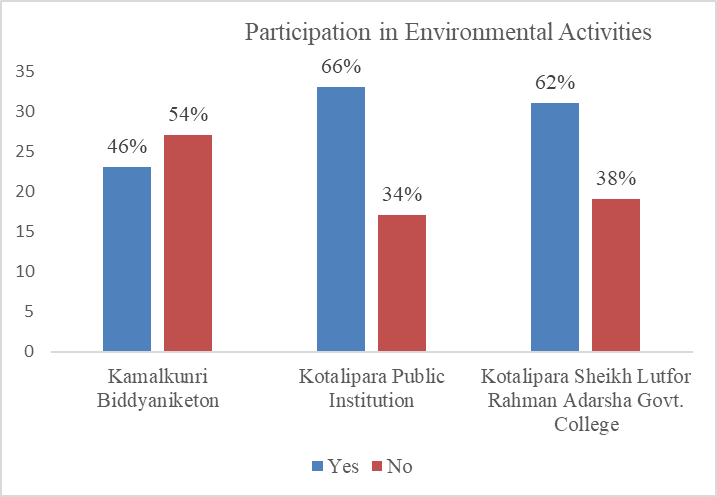
Figure 1: Environmental Activity Participation Comparison
Table 6: Reported Barriers to Participation in NBS Activities (Multiple Responses Allowed)
Institution | Lack of Awareness | No Training | No Financial Support | Lack of Interest | Limited Opportunities | |||||
n | % | n | % | n | % | n | % | n | % | |
Kamalkunri Biddyaniketon | 22 | 44 | 17 | 34 | 10 | 20 | 8 | 16 | 18 | 36 |
Kotalipara Public Institution | 19 | 38 | 20 | 40 | 13 | 26 | 5 | 10 | 13 | 26 |
Kotalipara Sheikh Lutfor Rahman Adarsha Govt. College | 8 | 16 | 26 | 52 | 20 | 40 | 0 | 0 | 17 | 34 |
Table 7: Preferred Forms of Participation in NBS Initiatives
Institution | Tree Planting | Community Gardening | Riverbank Protection | Waste Management | Wetland Restoration | |||||
n | % | n | % | n | % | n | % | n | % | |
Kamalkunri Biddyaniketon | 17 | 34 | 7 | 14 | 6 | 12 | 12 | 24 | 8 | 16 |
Kotalipara Public Institution | 21 | 42 | 5 | 10 | 12 | 24 | 8 | 16 | 4 | 8 |
Kotalipara Sheikh Lutfor Rahman Adarsha Govt. College | 33 | 66 | 6 | 12 | 2 | 4 | 6 | 12 | 3 | 6 |
This study explored awareness, participation, barriers, and preferences related to Nature-Based Solutions (NBS) among school and college students in Kotalipara, Gopalganj, Bangladesh [16]. The findings reveal a generally high level of awareness of NBS among youth, particularly those in higher secondary education. A total of 93.3% of students across all three institutions indicated they had heard of NBS, with the highest awareness (98%) noted in Kotalipara Sheikh Lutfor Rahman Adarsha Government College. This result aligns with similar studies conducted in other developing countries. For instance, Joseph et al. reported that 87% of secondary-level students in rural Kerala, India, were aware of nature-based environmental strategies [17]. Similarly, a study by Bano & Khan (2020) in rural Pakistan found that 89% of higher secondary students could identify at least one NBS initiative, such as afforestation or wetland preservation [18]. These comparisons suggest a consistent trend in awareness when structured community outreach and media are involved. The current study also highlighted the role of information sources in shaping youth awareness. Social media emerged as the dominant medium through which students learned about NBS, followed by community programs and family discussions [19]. Notably, formal education contributed to awareness only in the college-level group, reflecting the gap in curriculum inclusion at the school level. This observation supports findings by Corpuz et al., who emphasized the need to integrate environmental education and sustainability modules into secondary school curricula across South Asia. Their research found that integrating NBS into educational programs significantly improves youth participation and long-term behavioral change [20]. In terms of familiarity with specific NBS activities, tree plantation was the most recognized across all institutions. Over 75% of respondents in each school mentioned tree plantation as an NBS activity, and college students demonstrated a broader understanding by also citing wetland conservation, organic farming, and mangrove restoration. These findings resonate with research conducted by Tanwar et al. in coastal Bangladesh, where school children living near Sundarbans were more likely to identify diverse NBS activities, including mangrove reforestation and climate-smart agriculture [21]. Such results highlight the impact of ecological proximity and targeted programs on NBS awareness. Participation in environmental activities, however, revealed a declining trend with lower age groups. While 66% of students at Kotalipara Public Institution engaged in environmental programs, only 46% from Kamalkunri Biddyaniketon reported such involvement. This drop may reflect limitations in institutional support and age-appropriate engagement strategies. Previous studies, such as those by Donela et al., demonstrated similar findings, where urban school programs supported by NGOs had higher participation rates (66%) than those in less-resourced rural areas (57%) [22]. Figure 1 illustrates these disparities clearly, showing higher participation among older students. This supports the hypothesis that maturity, educational exposure, and social involvement increase with age, positively impacting environmental participation. Additionally, obstacles to participation were thoroughly investigated. The most commonly mentioned barriers among school-level students were ignorance and inadequate instruction, but college students' answers were primarily dominated by financial limitations and a lack of possibilities [23]. Interestingly, lack of interest was least cited, particularly at the college level, indicating that motivation may not be the primary challenge but rather structural and institutional limitations. These observations echo the conclusions drawn by Cromley et al., who emphasized the importance of resource allocation and training workshops for youth involvement in climate resilience initiatives in rural Bangladesh [24]. The preference data further reinforce youth willingness to engage in environmental protection if given structured and feasible opportunities. Tree planting remained the most preferred activity, chosen by over 70% of respondents. College students also showed interest in community gardening and waste management, reflecting their readiness to undertake more diverse and localized actions. These preferences are in line with findings from Pathiraja (2023), who noted that youth across South Asia increasingly favor community-based and visible environmental activities, particularly when linked to educational or social recognition [25]. This study also brings to light the potential for policy and curriculum reforms to foster better NBS understanding and engagement at the grassroots level [26]. The absence of school-based NBS instruction, as seen in the zero count for curriculum-driven awareness among students from the two school-level institutions, highlights a major gap in formal education. Integrating NBS-related content in science, geography, and civics classes can serve as a powerful tool to increase early awareness and participation, a recommendation supported on Education for Sustainable Development (ESD) [27]. Furthermore, community-based organizations and local government units could play a more proactive role in promoting student-led environmental initiatives [28]. The strong influence of community programs observed in this study suggests that youth engagement increases significantly when they are involved in hands-on learning and group activities outside the classroom [29].
Limitations of the study:
The use of purposive sampling from three specific educational institutions in Kotalipara might limit the generalizability of the findings to the broader youth population in the region or Bangladesh as a whole.
The cross-sectional nature of the study provides a snapshot of awareness and participation at a single point in time and does not capture changes or trends over time.
The data relies on self-reported information from students, which might be subject to recall bias, social desirability bias, or variations in understanding.
The study primarily focused on awareness and self-reported participation. It did not delve deeply into the quality or impact of the environmental activities undertaken.
The questionnaire might have focused on a specific set of NBS activities, potentially overlooking other relevant local practices or understandings.
This study highlights a strong initial awareness of NBS among youth in Kotalipara, particularly at higher education levels, with social media and community programs playing key roles in information dissemination. However, participation in environmental activities declines in younger age groups, suggesting a need for more age-appropriate and institutionally supported engagement strategies. The lack of formal NBS education in schools presents a significant gap. Therefore, integrating NBS into school curricula, enhancing practical training opportunities, and providing financial support are crucial recommendations to foster greater youth engagement and empower them as active agents in ecological resilience within their communities.
Funding: No funding sources
Conflict of interest: None declared
Ethical approval: The study was approved by the Institutional Ethics Committee.
Seddon N, Chausson A, Berry P, Girardin CA, Smith A, Turner B. Understanding the value and limits of nature-based solutions to climate change and other global challenges. Philosophical Transactions of the Royal Society B. 2020 Mar 16;375(1794):20190120.
Smith R, Guevara O, Wenzel L, Dudley N, Petrone-Mendoza V, Cadena M, Rhodes A. Ensuring co-benefits for biodiversity, climate change and sustainable development. InHandbook of climate change and biodiversity 2018 Aug 29 (pp. 151-166). Cham: Springer International Publishing.
Debele SE, Leo LS, Kumar P, Sahani J, Ommer J, Bucchignani E, Vranić S, Kalas M, Amirzada Z, Pavlova I, Shah MA. Nature-based solutions can help reduce the impact of natural hazards: A global analysis of NBS case studies. Science of the Total Environment. 2023 Dec 1;902:165824.
Herbst M. The State of the World's Children 2024: The Future of Childhood in a Changing World. UNICEF. 3 United Nations Plaza, New York, NY 10017; 2024 Nov.
Sithole SS. Youth engagement with conservation: From global platforms to local landscapes (Doctoral dissertation, Université de Lausanne, Faculté des géosciences et de l'environnement).
Kolleck N, Schuster J. Youth participation in global policy networks on climate change. International Journal of Educational Research. 2022 Jan 1;114:102002.
Walz Y, Nick F, Higuera Roa O, Nehren U, Sebesvari Z. Coherence and Alignment among Sustainable Land Management, Ecosystem-based Adaptation, Ecosystem-based Disaster Risk Reduction and Nature-based Solutions.
Shehab MK. Experience and perceptions of climate change-related hazards, and the dynamics of technology-based adaptations in water use in Bangladesh: The case of Satkhira communities.
Kebede MM, Kumar M, Mekonnen MM, Clement TP. Enhancing Groundwater Recharge Through Nature-Based Solutions: Benefits and Barriers. Hydrology. 2024 Nov 16;11(11):195.
Waite S, Husain F, Scandone B, Forsyth E, Piggott H. ‘It’s not for people like (them)’: structural and cultural barriers to children and young people engaging with nature outside schooling. Journal of Adventure Education and Outdoor Learning. 2023 Jan 2;23(1):54-73.
Pappianne P. Voices of Bangladeshi Environmental Youth Leaders: A Narrative Study (Doctoral dissertation, Antioch University).
Balongo CV, Gitau JW. The societal role of youth and women in global conservation of the environment for sustainability. Impact: Journal of Transformation. 2022 Dec 21;5(2):103-23.
Kiss B, Sekulova F, Hörschelmann K, Salk CF, Takahashi W, Wamsler C. Citizen participation in the governance of nature‐based solutions. Environmental Policy and Governance. 2022 Jun;32(3):247-72.
Morgan J. Participation, empowerment and capacity building: Exploring young people's perspectives on the services provided to them by a grassroots NGO in sub-Saharan Africa. Children and Youth Services Review. 2016 Jun 1;65:175-82.
Ismail L, Mukramin SU, Muhammadong M. GROWING AWARENESS OF ENVIRONMENTAL LOVE IN YOUTH: AN ACTION TOWARDS A PROSPEROUS VILLAGE IN LAMBAI VILLAGE, LAMBAI DISTRICT, NORTH KOLAKA DISTRICT. TOPLAMA. 2024 Jan 13;1(2):54-65.
Anjum B, Sultana R, Saddaf N. The effectiveness of nature-based solutions to address climate change in Dhaka, Bangladesh. Social Sciences & Humanities Open. 2024 Jan 1;10:100985.
Joseph S, Patil K, Kulkarni AV, John M. Sustainability education in India: A discourse in education development. InThe Routledge Handbook of Global Sustainability Education and Thinking for the 21st Century 2025 Feb 20 (pp. 876-899). Routledge India.
Ullah A, Sam AS, Sathyan AR, Mahmood N, Zeb A, Kächele H. Role of local communities in forest landscape restoration: Key lessons from the Billion Trees Afforestation Project, Pakistan. Science of The Total Environment. 2021 Jun 10;772:145613.
King P, Martin-Ortega J, Armstrong J, Ferré M, Bark RH. Mainstreaming nature-based solutions: What role do Communities of Practice play in delivering a paradigm shift?. Environmental science & policy. 2023 Jun 1;144:53-63.
Corpuz AM, San Andres TC, Lagasca JM. Integration of environmental education (EE) in teacher education programs: Toward sustainable curriculum greening. Problems of Education in the 21st Century. 2022;80(1):119.
Tanwar N, Agrawal R, Goodarzi LS, Sarkar-Swaisgood M, Cipolla N, Oh E, Kim D, Chen Y, Kim SJ, Kim M, Maruichi D. Targeting transformative disaster risk resilience in South and South-West Asia: Asia-Pacific Disaster Report 2024 for ESCAP Subregions.
Besada D, Eagar D, Rensburg R, Shabangu G, Hlahane S, Daviaud E. Resource requirements for community-based care in rural, deep-rural and peri-urban communities in South Africa: A comparative analysis in 2 South African provinces. PLoS One. 2020 Jan 30;15(1):e0218682.
Grubb WN. The money myth: School resources, outcomes, and equity. Russell Sage Foundation; 2009 Jan 15.
Cromley JG, Perez T, Kaplan A. Undergraduate STEM achievement and retention: Cognitive, motivational, and institutional factors and solutions. Policy Insights from the Behavioral and Brain Sciences. 2016 Mar;3(1):4-11.
Pathiraja SM. The role of eco-villages in community-based environmental education: a comparative study of communities in Sri Lanka and the United Kingdom (Doctoral dissertation, Durham University).
Kiss B, Sekulova F, Hörschelmann K, Salk CF, Takahashi W, Wamsler C. Citizen participation in the governance of nature‐based solutions. Environmental Policy and Governance. 2022 Jun;32(3):247-72.
Mahmoud IH, Morello E, Rizzi D, Wilk B. Localizing Sustainable Development Goals (SDGs) Through Co-creation of Nature-Based Solutions (NBS) Towards an Assessment Framework for Local Governments. InThe Palgrave encyclopedia of urban and regional futures 2023 Jan 14 (pp. 980-996). Cham: Springer International Publishing.
Mittal P, Bansal R. Community engagement for sustainable practices in higher education: From awareness to action. Springer Nature; 2024.
Ludden AB. Engagement in school and community civic activities among rural adolescents. Journal of Youth and Adolescence. 2011 Sep;40:1254-70.
Download PDF
Download PDF
Download PDF
Download PDF